What happens when a career or relationship still looks good from the outside, but you are slowly losing yourself inside it.
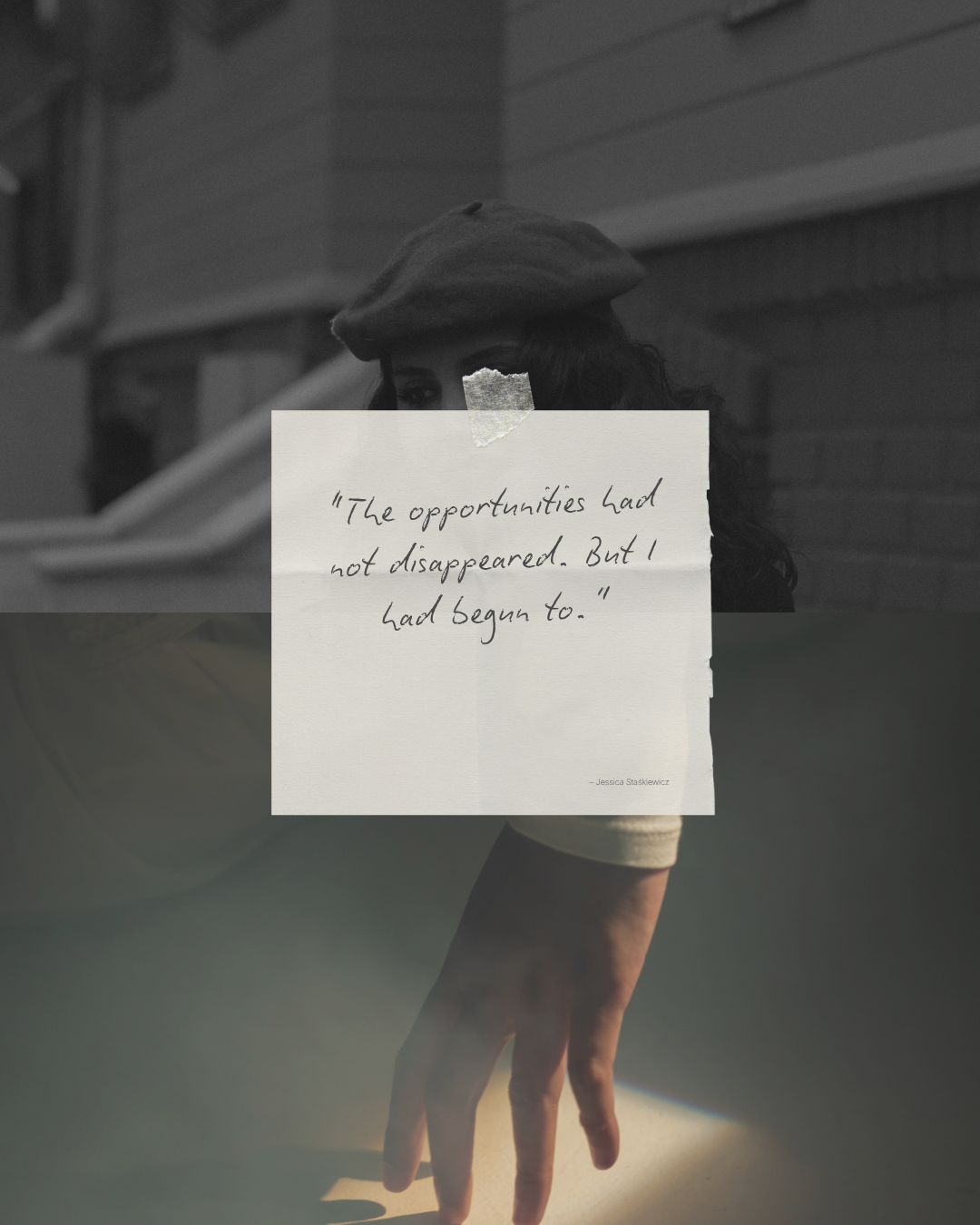
I received an email from an old (and loved) boss, she wrote candidly about the time we worked together and wrote that leaving when I did was a missed opportunity as further leadership progression was inevitable, if I’d only articulated that I’d wanted it.
And here I am a few days later still wondering whether what I feel is nostalgia or regret.
In truth, it is both.
That decade in international aid work was the best of times, and the worst of times. It gave me intensity, fulfilment and exposure to a world that many never see. Staying would have almost certainly given me a life that only became more and more extraordinary.
There are moments I miss it, a lot.
Her email unsettled me because it confirmed something I already knew: I had not reached the limit of what was possible for me there.
I could have risen further. I could have had a remarkable career.
And leaving was still the right decision.
Leaving a job you love is difficult precisely because there is no simple villain and no clean case for going.
I cried when I told her I was resigning. But the moment I walked out of her office, the tension poured out of my shoulders and a smile settled on my face.
And it was wild because I didn’t hate that job, in fact, I loved it. I loved the team. I loved the work. It was a privilege to work with the leadership team. There was no limit on where I could go or what I could do.
But I was done.
And I’d been done for a good while. I just hadn’t verbalised it.
When a Good Job Is No Longer Good for You
If there is one lesson (and there are many) to take from that period of time it is this:
Notice the signs early. Take them seriously.
We are taught to leave a job or marriage when something is clearly bad, broken or impossible—and even then, we are told to try to make it work.
Nobody tells us about the crossroads we stand at when something is still good, but we are no longer alive inside it.
I am not talking about a hard month, a flat season or the ordinary demands of commitment. I am talking about the slow, sustained experience of becoming less and less yourself.
A job can be meaningful and still no longer be right for you. A marriage can contain love and still still leave you empty.
I called it very, very late. I was a shell of myself by the end. I felt restless. And frustrated. And listless. There were months when my head was somewhere else entirely. Days when I collapsed the moment I got home. But I dismissed it all as part of riding the waves of the job.
And none of it helped.
It was costly. It was costly to an organisation that depends on you to keep your teams and projects running and stakeholders engaged.
But it was also costly to me.
We’ve all been in that place - whether its with work or a relationship - where you’re just so deep in it trying to make it work that you stop asking if it’s working for you.
You’re functioning, but stressed, distracted and sometimes overwhelmed. It’s often easier to just ignore the signs than actually get quiet enough to listen question your career, or question your marriage - and listen to the answers.
Sometimes what we call career burnout is not only about workload. It is also the exhaustion of remaining in a life you no longer are a full yes to.
By the end my hair was falling out, my skin was sallow, my nails brittle. I had no left over energy for friends or weekends. I relied on sleeping tablets. I had a miscarriage one morning and left for work 10 minutes later.
Thats how distant from myself I had become.
The most dangerous form of self-abandonment is the one that becomes normal.
The difficult thing is that, while I was inside it, none of this felt dramatic. It had just become my norm.
That is one of the dangers of disappearing slowly. Your life and energy contract by degrees. You become accustomed to feeling numb. You stop comparing your life to what it used to feel like, you focus only on making today survivable enough.
I needed someone to say: this is not just a difficult season. You are disappearing.
I do not know whether better support would have helped me stay. Perhaps there was a version of that career in which I could have remained and come back to life. But by the time I finally understood the cost, I no longer had the internal resources to rebuild myself there. I needed to go.
I’ve referred to this in the past as career burnout. And sure, the signs and symptoms all match up. But what I really think it was was a profound disconnect. A form of existential exhaustion that came from overriding everything for so long that my candle went out.
And I lost myself.
I was not only questioning my career. I was questioning who I would be without it.
I knew on some level I needed to leave, but I had zero way to connect with what I wanted. Or who I was. My work had become my identity. I was competent, liked and respected. I knew who I was there. I did not know who I was outside of it.
So I stayed.
For way too long.
And when I left there was next to nothing left.
The Hidden Cost of Staying Too Long
People talk about weighing the costs of staying versus going in terms of the tangible, or the moral - like whether you can justify leaving in the middle of a project, or manage the loss of income, or deal with the grief of leaving something you once, or still, love.
But no one really talks about the hidden cost of staying.
We ask, “What will it cost me to leave?” We rarely ask, “What is staying already costing me?”
My energy was gone, my personality had flattened, my confidence had plummeted, there was no vitality, no fire, no life, and no self-trust.
I had spent months, if not years telling myself it would get better. Settling for how things were. All the while becoming less and less recognisable to myself.
My indecision was not neutral. Waiting for things to improve had a cost.
Are you sitting on a decision that you keep pushing away?
You don’t need more advice. You don’t need more time.
You need what no high-performing woman has access to - the space to hear the truth beneath the noise.
I created this free resource Make the Decision You’ve Been Avoiding for this exact place.
Not to pep talk you into leaving your career or relationship.
But to help you seperate what you already know from fear and find the next honest step forward.
You Do Not Need to Wait Until Your Life Is Unbearable
This is not really a story about leaving a job.
It is a story about what happens when a woman becomes so practiced at overriding herself that disconnection from herself begins to feel normal.
I cannot tell you whether the thing you are questioning needs to end.
But I can tell you this: you do not need to wait until there is nothing left of you before you take the question seriously.
Stop treating your disappearance as the price of being loyal.
Notice when you are slowly disappearing.
Let yourself want more than a life that only looks good on paper.
The capable, responsible version of you is not the only who gets to call the shots
Let the woman with energy and fire, appetite and desire have a say in what comes next.
Losing myself is what led me here - to the Aliveness Project, and to this work - because I refuse to live in a world where women slowly go numb and call it being responsible.
This is not me telling you whether to stay or go.
This work is about coming back into contact with yourself and your fire. It’s telling the truth about what’s happening, and moving in the direction of a life that feels like your own again.
xo
Jess